

Selora | Walking & Wellness
7 Reasons Your Walking Shoes May Be Working Against Your New Weight-Loss Routine
You've finally found an exercise you can stick with. But if your feet start bothering you halfway through your walks, there's one overlooked part of your sneakers you should check before spending money on new shoes.
You started walking for a reason.
Maybe you want to lose 20 pounds. Maybe you want your clothes to fit better. Or maybe you're simply tired of feeling like you've put your health on the back burner.
And walking seemed like the perfect answer.
No gym. No complicated workouts. Just you, your sneakers, and 30 minutes a day.
But then something frustrating happens.
Your feet start feeling uncomfortable before you're ready to finish.
You cut a walk short. You dread putting your shoes on the next day. And suddenly, the simple exercise you were so excited about doesn't feel quite so simple.

But what if your motivation isn't the thing that needs changing?
What if there's something about your walking shoes you've been overlooking?
Here are 7 reasons to take a closer look before buying another pair of sneakers.
01. The Problem Might Not Be Your Motivation at All
Think about it.
You finally decided to get active. You've made time in your schedule. You're actually getting outside and walking.
The desire to keep going is there.
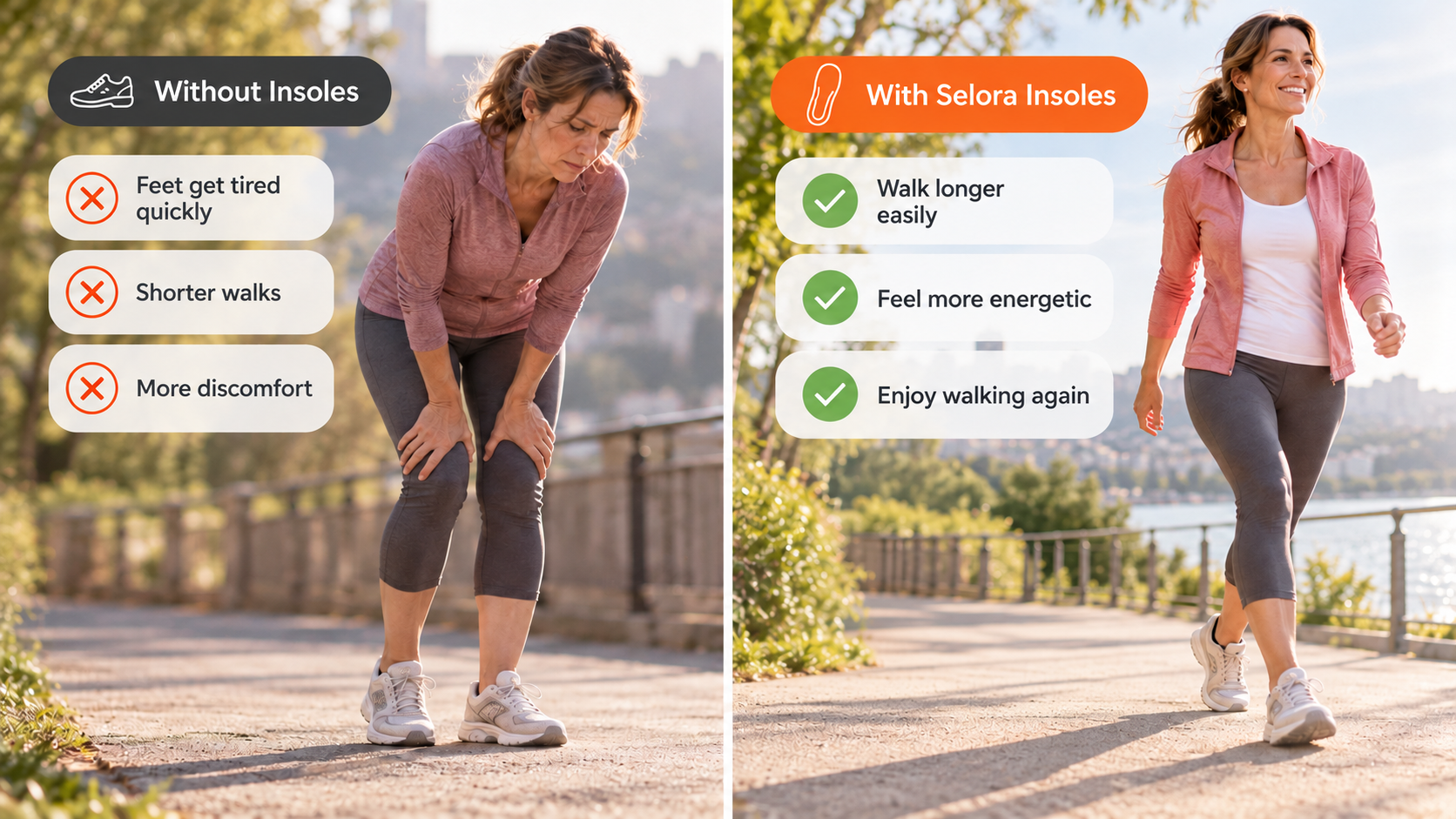
But sometimes, 20 or 30 minutes into your walk, your feet start getting uncomfortable.
And suddenly, you're no longer thinking about your weight-loss goals.
You're thinking about getting home.
It's tempting to blame yourself for struggling to stay consistent.
But motivation and footwear comfort are two very different things.
If discomfort keeps interrupting your walks, your footwear is one practical place worth investigating.
Because building a walking habit is difficult enough without making every outing feel like another challenge.

02. Your Everyday Sneakers Are Suddenly Doing a Completely Different Job
Here's the part most people don't think about when they start walking regularly.
The sneakers you've worn for years might feel perfectly fine for grocery shopping, running errands, or walking from the parking lot.
But now?
You're wearing those same shoes for regular 30-, 40-, or even 60-minute walks.
The shoes haven't changed. The demands you're placing on them have.
More time on your feet means more time noticing the cushioning, shape, and fit of your footwear.
And shoes that feel perfectly comfortable for short errands don't necessarily feel the same during longer walks.
That doesn't automatically mean your sneakers are bad.
It simply means your new routine may be revealing comfort issues you never noticed before.
And there's one particular part of your shoes that's easy to overlook.

03. The Most Overlooked Part of Your Sneakers Is Sitting Right Beneath Your Feet
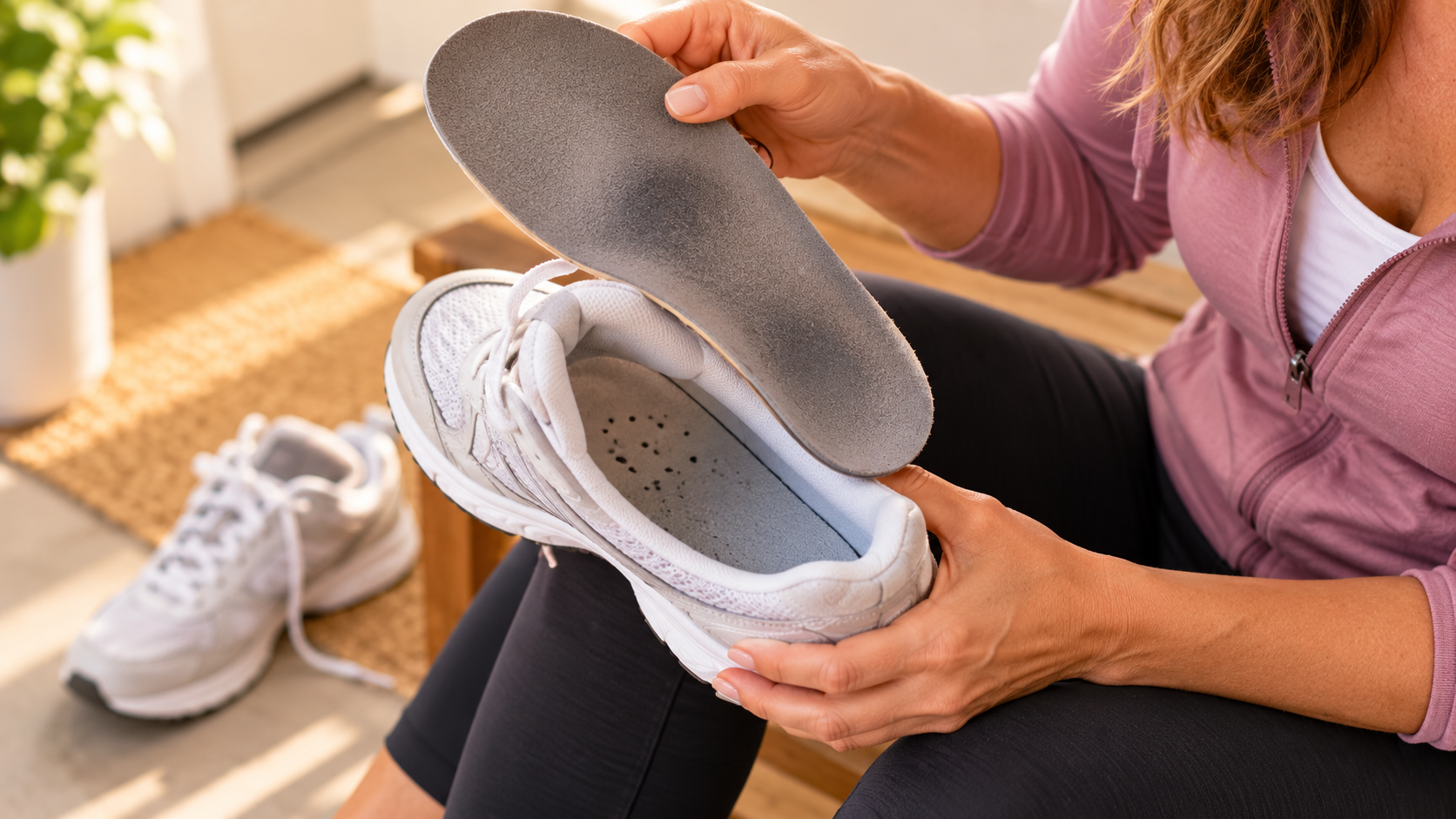
Take a look inside one of your walking shoes.
See that removable layer resting at the bottom?
That's your shoe's footbed, often called an insole.
It's the surface your foot rests against with every step.
Depending on the shoe, that original liner may be relatively flat, thin, or simply not your preferred level of cushioning.
And when you start walking more frequently, the way that surface feels can become increasingly noticeable.
Here's the important part: you don't always have to replace the whole shoe to change what your feet rest on.
In suitable shoes with removable footbeds and enough interior room, you can replace that layer with a cushioned, contoured insole.
It's a surprisingly straightforward option that many people don't consider until they're already shopping for new sneakers.
04. A $100 Pair of New Sneakers Isn't Your Only Option
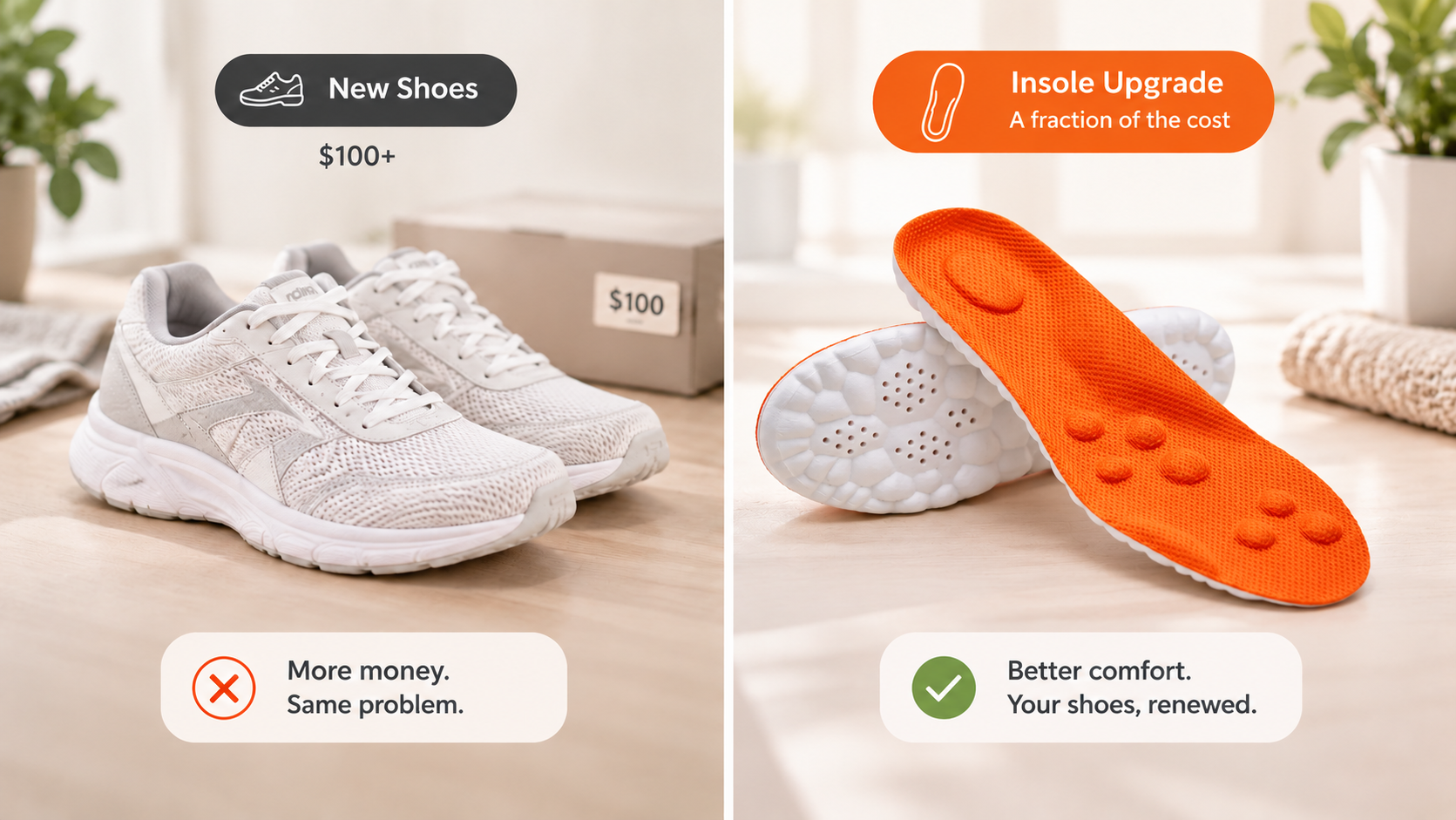
When your feet start feeling uncomfortable, buying new walking shoes might seem like the obvious solution.
But there's a problem with that approach.
A higher price doesn't guarantee that a particular shoe will feel right for your feet.
You could spend $100 or more and still dislike the cushioning or fit.
Of course, worn-out or poorly fitted shoes may genuinely need replacing.
But if your current sneakers are otherwise suitable, changing their removable footbed offers another possibility.
That's the idea behind Selora All-Day Comfort Insoles.
Instead of replacing the entire shoe, Selora provides a different surface for your feet to rest on.
One with soft cushioning and supportive contours designed for everyday movement.
And that brings us to what makes the swap worth considering.
05. Selora Changes the Underfoot Feel in Ways You Can Actually Understand
Forget complicated medical terminology for a moment.
When you're walking, you want your shoes to feel comfortable.
Selora approaches that with three practical design elements:
Soft, shock-absorbing foam: Adds a cushioned layer beneath your feet instead of relying solely on your shoe's original liner.
Contoured heel-and-arch shape: Provides a more defined surface that some walkers may find more supportive than a flat footbed.
Breathable, flexible construction: Designed to accommodate ordinary movement inside compatible everyday footwear.
No miracle technology.
No claim that an insole can make the pounds disappear.
Just a straightforward change to the part of your shoe your foot rests on.
Because when you're trying to make walking a lasting habit, the way your shoes feel matters.
06. More Expensive Support Doesn't Automatically Mean More Comfort
Here's something important before you rush to buy any replacement insole.
Not every foot likes the same kind of support.
Some people prefer soft cushioning. Others appreciate a more pronounced contour. And an insole that feels great in one sneaker might feel too tight in another.
That's why simply choosing the firmest or most expensive insert isn't necessarily the answer.
A comfortable insole needs to suit your feet AND your shoes.
Before trying Selora, check the sizing, the room available inside your footwear, and whether you can remove the original footbed.
Start with shorter wearing periods and pay attention to how your feet feel.
If an insert causes discomfort, stop using it. Persistent or worsening pain deserves professional assessment.
A believable comfort upgrade should help you make an informed choice—not promise that one product works for everyone.

07. Because Your Walking Routine Deserves a Better Setup, Not Another Empty Promise
Remember why you started walking.
It wasn't because you wanted to become an expert on sneakers, arch support, or shoe technology.
You wanted to feel healthier.
You wanted to become more active.
Maybe you wanted to lose weight and finally feel like you were making progress toward a goal you've had for years.
And you chose walking because it felt like something you could realistically do.
That's what makes your footwear worth paying attention to.
Selora isn't a shortcut to weight loss, and it can't guarantee longer or pain-free walks.
But it is a practical way to explore a softer, more contoured underfoot feel in compatible shoes.
Before spending more money replacing sneakers that otherwise fit well, why not find out whether a different insole is right for you?

You Already Took the First Step. Make Your Walking Shoes Worth Keeping.
You've committed to becoming more active.
Now give some thought to the shoes you're relying on to get there.
Selora Comfort Insoles offer a simple cushioning upgrade for the walking routine you're building.
Check the sizes, explore how they fit, and see whether they're right for your everyday sneakers.

Selora is an everyday footwear comfort product, not a medical treatment or weight-loss solution. Fit and comfort vary by person and shoe.